
The Lord Leycester and Ancient Egypt
Although you would not guess it, we have links to the Pharaohs of Ancient Egypt with a gem hidden in plain sight in the Master’s Garden.
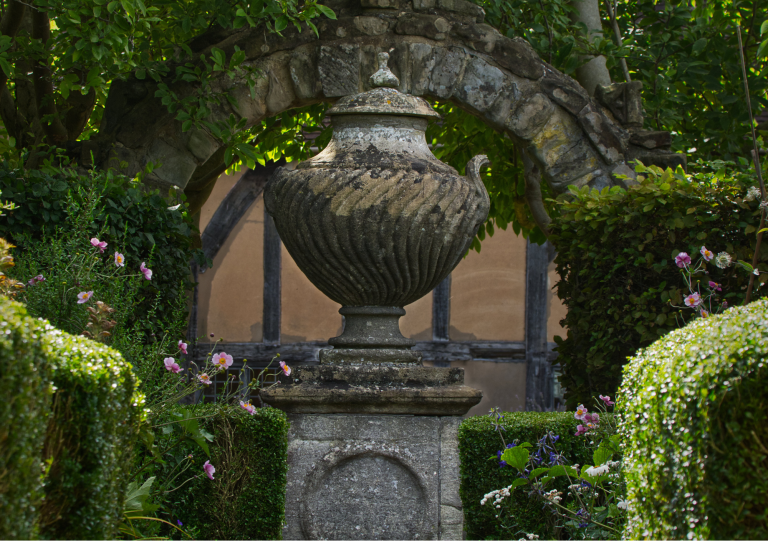
Walking through the gardens you may have come across this stone urn under a Norman Arch and flanked by four cannonballs. Originally, sat on top of a structure known as a Nilometer, it is the oldest artifact on site.
What is a Nilometer?
A Nilometer is a type of structure which was built by the Ancient Egyptians with the purpose of measuring the height and clarity of the River Nile. Many of these structures were built around Egypt and at different stages. There were also three different types, the most relevant to this being a column similar to the image shown below.
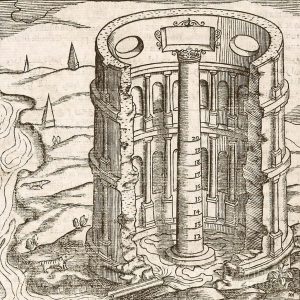
Primarily, this would have been used for agricultural purposes to read how much water would come onto the floodplain. This was particularly important to them during the flood season, which was known as Akhet or The Season of the Inundation. However, due to the importance of the River Nile to the Ancient Egyptians, the river was also revered, and had great religious, cultural and political importance. This importance also extended to the Nilometer, of which was only accessible by priests who were the only ones who could monitor the water levels, and were responsible for doing each day. The only other people who could access it were nobility. This ensured that there was accountability on the readings, but also helped to perpetuate the elite. The quality of the year’s flood would also be used to calculate the tax that had to be paid for the year.
The urn makes its way to the Lord Leycester
The Stone urn originally came under the possession of Warwick Castle where it was put on display inside the Conservatory of the Peacock Garden. However, this would change when it was presented to The Lord Leycester Hospital in 1838 by George Greville, the 4th Earl of Warwick. It is proposed that the urn was first acquired by the 2nd Earl of Warwick from his uncle, Sir William Hamilton, approximately the same period as the Warwick Vase. The pedestal of which the urn is upon is said to have originally featured an inscription in Latin from a Dr. Parr, a frequent visitor to the site.
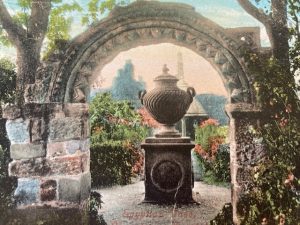
Image of the Nilometer urn from a postcard dated 1905.