
William Morris at the Lord Leycester
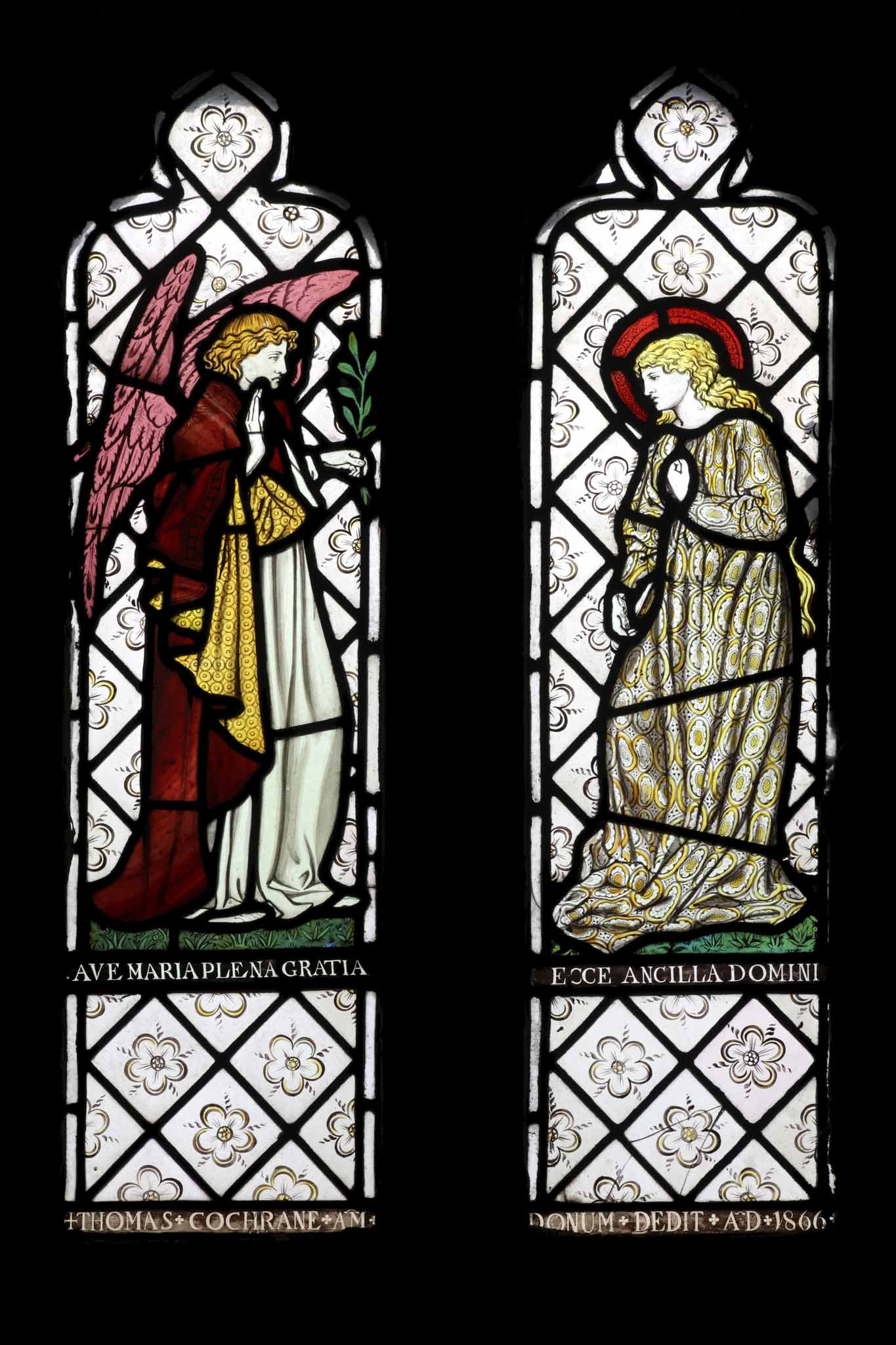
Have you visited our chapel yet? If so, you may have seen this stained-glass window which lies above one of the doors.
You may be forgiven for missing it, as it is extremely small compared to the stained-glass window which lies behind the altar. Yet, of our stained-glass windows, this is our most valuable because it was created by William Morris.
Morris & Co.

Born in Essex on the 24th of March 1834. William Morris was an Artist, a Craftsman, an Activist and a Writer. He was also associated with the Pre-Raphaelite Brotherhood which was a society established in 1848 by a group of like-minded artists who rejected the Royal Academy’s standard of the time which was set by Renaissance artist Raphael. As part of this rejection of the modern they turned to the styling of medieval art and were inspired by nature. Yet it is his work in the Arts and Crafts movement that he is most well known for.
In 1861, Morris would establish his firm Morris, Marshall, Faulkner & Co with many other artists who had links to the Pre-Raphaelite movement. This was a group of kindred artists and craftsmen who were responding to the practices of the time which were frequently poor-quality. This firm would later be renamed in 1875 to Morris & Co after William Morris assumed total control of the company. It would be in this organisation that he would design the tapestries, wallpaper, fabrics, furniture and stained-glass windows which he would become famous for.
Morris & The Lord Leycester
Designed in 1861, the Stained-Glass Window is one of his earliest works. Yet, it would not be until 1866 when it would be installed at the Lord Leycester Hospital along with altar covers.
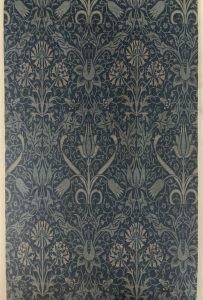
A Picture of one of the altar covers.
The window is of particular interest as it features an Annunciation scene with the Angel Gabriel informing Mary that she will miraculously give birth to the son of God. However, instead of the traditional white lily, Gabriel carries an olive branch which symbolises peace and the start of a new world due to its association with Noah’s Ark. There is also a prayer to Mary below the window and a dedication to Reverend Thomas Cochrane who was the Master of the Lord Leycester at the time they were donated.
Although both the Stained-Glass Window and the Altar Coverings can still be found here. The Altar Coverings are now found in the Master’s Dining Room. Nonetheless, both are spectacular pieces of work which reflect the different muses of William Morris. Next time you visit the Lord Leycester see if you can find them.
Thumbnail Photography by Alastair Carew-Cox. Taken from the forthcoming book The Expression of Thought and Emotion, William Morris as stained-glass designer.